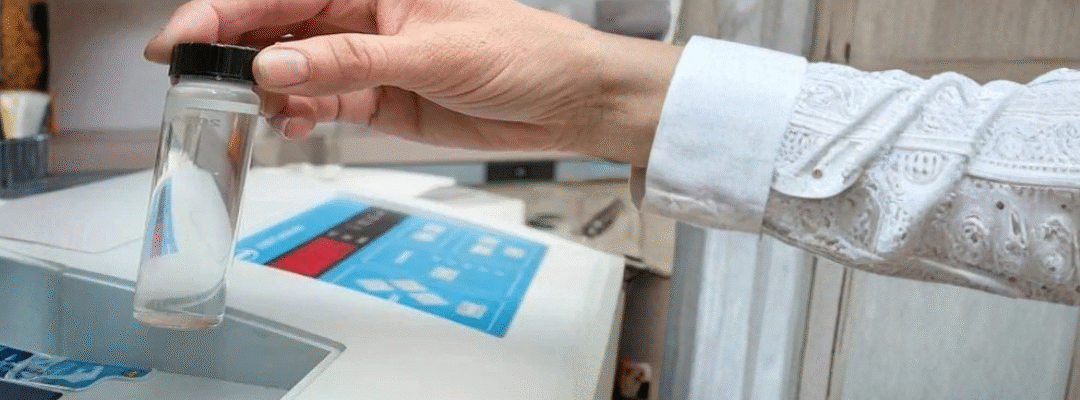
A New York City school may appear modern and well maintained, yet its drinking water can still be affected by aging internal plumbing, older fixtures, or recently installed faucets. Testing only one outlet may overlook contamination elsewhere in the building because lead levels can vary between classrooms, kitchens, and drinking fountains. NYC school water testing specialists can evaluate individual water outlets and help administrators identify areas that require corrective action.
This discovery highlights a critical and often misunderstood reality of urban living. Even when a municipality like Jersey City successfully manages its infrastructure and provides high-quality water to the property line, the “last inch” of plumbing inside the home remains a private variable. For this family, the danger wasn’t coming from the street; it was coming from within their own walls, specifically from a fixture they assumed was brand new and safe.
The “Lead-Free” Faucet Fallacy
The most confusing aspect of this case for the Jersey City family was that the nursery faucet was a modern, stylish model purchased from a major retailer. Like most consumers, they assumed that “new” meant “safe.” However, the term “lead-free” in the plumbing industry has historically been a relative term rather than an absolute one.
Until the federal Reduction of Lead in Drinking Water Act was fully implemented in 2014, “lead-free” pipes and fixtures could legally contain up to 8% lead by weight. Even under current standards, “lead-free” allows for a weighted average of 0.25% lead on wetted surfaces. While this is significantly safer than legacy brass, it is not zero. In a nursery setting, where water often sits stagnant for long periods between uses, even these trace amounts can leach into the water, creating a concentrated “slug” of lead in the first cup drawn from the tap. Understanding these health risks is vital for parents, as infants and toddlers are the most vulnerable to the neurotoxic effects of lead exposure.
The Danger of Stagnation in “Secondary” Taps
In any home, there are primary taps (like the kitchen sink) and secondary taps (like a guest bathroom or a nursery sink). Primary taps are flushed constantly throughout the day, ensuring that the water inside the pipes is always fresh. Secondary taps, however, are prone to stagnation.
In the Jersey City home, the nursery faucet was rarely used during the renovation process. Water sat in contact with the internal brass components of the fixture and the soldered joints behind the wall for days at a time. This prolonged “contact time” is the primary driver of lead leaching. This is a key pillar of public education: the safety of your water is as much about your usage habits as it is about the pipes. A tap that sits unused is a tap that is accumulating risk.
Jersey City Infrastructure vs. Premise Plumbing
Jersey City has been a leader in Northern New Jersey for its transparency regarding lead service lines. The city’s policy of inventorying and replacing lead lines at no cost to many residents has significantly improved the baseline safety of the community. However, the city’s responsibility ends at the water meter.
For families living in Jersey City’s beautiful brownstones or pre-war apartment buildings, the internal “premise plumbing” is a patchwork of history. You might have a brand-new copper line from the street, but the vertical risers inside the building could be 80-year-old galvanized steel, or the branch lines under the floor could be joined with lead-based solder. This family’s experience serves as a reminder that a “clean” city report does not exempt an individual home from the need for local tap-specific testing.
The Hidden Role of the Faucet Aerator
Upon discovering the high lead levels, the family sought professional guidance. One of the first things they were told to check was the faucet aerator—the small screen at the end of the spout. Aerators are designed to conserve water, but they also act as a filter that traps tiny particulates.
During the renovation of their Jersey City home, the vibration from nearby construction or the installation of new valves likely knocked loose “scale” from the old internal pipes. These tiny, lead-rich flakes became trapped in the nursery faucet’s aerator. Every time the water was turned on, it passed over these concentrated particles, spiking the lead levels. This is a common troubleshooting tip found in our faq section: sometimes the “lead problem” is simply a dirty screen that needs a five-minute cleaning.
Why First-Draw Samples are Non-Negotiable
The family only discovered the issue because they insisted on a “first-draw” sample—the very first water to come out of the tap after it had sat unused for at least six hours. Had they run the water for a minute before taking the sample, the result would have likely been “non-detect,” and they would have moved into the nursery with a false sense of security.
For parents, the first-draw sample is the most important data point because it represents the “worst-case scenario”—the water used for that first early-morning bottle. We frequently discuss the nuances of sampling protocols on our blog, emphasizing that how you take the sample is just as important as where you send it.
Remediation: Turning a Failure into a Safe Space
Once the source was identified, the remediation was straightforward but essential. The family replaced the nursery fixture with a certified stainless-steel model (which contains zero lead) and implemented a “flushing” routine for all secondary taps in the house. They also installed a high-quality point-of-use filter under the nursery sink as an added layer of protection.
This proactive approach transformed a potential health crisis into a manageable home maintenance task. By testing before the baby arrived, they ensured that the nursery was truly the sanctuary they intended it to be. Their story is a powerful example of why “hope is not a strategy” when it comes to urban water safety.
Empowering Northern New Jersey Parents
Jersey City is a vibrant, growing community, but its “plumbing DNA” is complex. Whether you are in a historic home in Van Vorst Park or a newer mid-rise in Journal Square, you cannot assume that the water at your tap is identical to the water at the treatment plant.
The story of the nursery faucet failure is a call to action for all parents in Northern New Jersey. It is a reminder that water quality is a “tap-by-tap” reality. Testing is the only way to “see” the invisible risks that might be hiding in your fixtures or behind your walls.
Taking the Next Step for Your Family
If you are expecting a child or have young children in an older urban home, the most important thing you can do is get a baseline lab test for your most-used taps. Don’t wait for a change in taste or color—lead is invisible, odorless, and tasteless.
If you have questions about a recent test result or need help choosing a lab that understands the specific infrastructure challenges of Jersey City and the surrounding areas, please visit our contact page. Our team of specialists is dedicated to helping families navigate the complexities of water chemistry so they can focus on what matters most: the health and safety of their children.
Conclusion: Purity is a Private Responsibility
The Jersey City family’s discovery was a wake-up call, but it was also a success story. They used data to identify a hidden hazard and took the necessary steps to fix it. In an era where we are more concerned than ever about the environment our children grow up in, we must remember that the water at our kitchen and bathroom sinks is a fundamental part of that environment.
By testing at the tap, we take the responsibility for our family’s health into our own hands. We move from a place of uncertainty to a place of empowerment, ensuring that every drop of water our children consume is as pure as the love we put into building their homes.