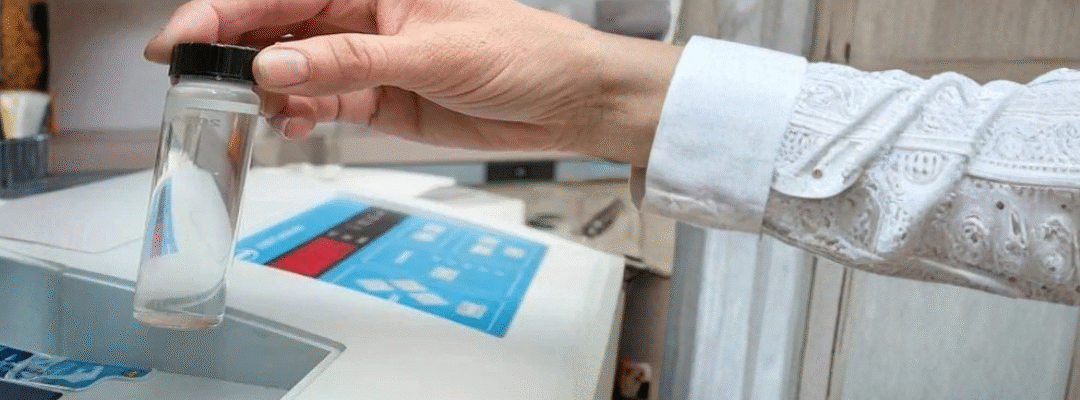
Many homeowners judge tap water by its appearance, assuming that clear, colorless water without visible particles must be safe. However, visual inspection cannot detect many contaminants associated with municipal infrastructure and internal plumbing. Environmental water testing in the Bronx can identify invisible pollutants, providing a more reliable assessment of water quality than appearance alone.
Trace metals—including lead, copper, cadmium, and arsenic—can exist in high concentrations in water that appears crystal clear. These substances do not change the color, taste, or odor of the water until they reach levels far exceeding safety thresholds. For families, especially those with young children, moving beyond the visual standard is essential for ensuring long-term health. Understanding why “clear” does not equal “safe” is the first step in a proactive approach to home water management.
The Chemistry of the Invisible
To understand how metals hide in clear water, we must look at the difference between “suspended solids” and “dissolved solids.” When we see brown or cloudy water, we are looking at suspended solids—large particles of rust or sediment that are physically floating in the liquid. These are often the result of a water main break or localized construction that has disturbed the system.
Trace metals, however, often enter the water in a dissolved state. Through a process called leaching, metal ions are pulled from the surface of pipes and fixtures directly into the water. This is a molecular-level event. Lead and copper ions are far too small to reflect light or create turbidity. A glass of water could contain lead levels ten times higher than the EPA action level and still look as pristine as a mountain spring. This is why public education focuses so heavily on testing; you simply cannot “see” the chemical risks.
The “Last Mile” and Premise Plumbing
Many residents feel a sense of security because their city’s water department issues a sparkling annual report. While it is true that municipal water is treated to meet strict federal standards at the plant, the journey from the street to your faucet is long and complex. This is what water experts call the “last mile” of infrastructure.
In many older neighborhoods, the service line—the pipe connecting the city main to your house—is made of lead. Furthermore, inside the home, copper pipes may be joined with lead-based solder (legal until 1986), or older brass fixtures may contain significant amounts of lead. As water sits in these pipes overnight, it has hours of “contact time” to absorb trace metals. Because this process happens slowly and at a molecular level, the water remains clear even as its metal content rises. This is a primary focus of our blog: the hidden interaction between municipal water and private plumbing.
Lead: The Tasteless Neurotoxin
Lead is perhaps the most notorious invisible contaminant. Unlike iron, which can leave a metallic taste or red stains, lead is completely tasteless and odorless. For a developing child, even low-level exposure to lead from “clear” water can have significant neurological impacts. Lead interferes with the development of synapses in the brain, which can lead to lower IQ, behavioral issues, and decreased attention spans.
The health risks associated with lead are cumulative. Because the body stores lead in the bones and teeth, small doses consumed over years can build up to a toxic load. Parents who rely on the “clarity” of their water are unknowingly bypassing the most important safety check for their children’s neurological health.
Copper and the pH Connection
Copper is another metal that frequently exists in clear water. While the body needs small amounts of copper, excessive levels can cause acute gastrointestinal distress, including nausea and stomach cramps. Long-term exposure can lead to more serious liver and kidney complications.
Copper leaching is often driven by the pH of the water. If your local water supply is slightly acidic or “soft,” it acts as a solvent, eating away at the interior of your copper pipes. While high levels of copper can eventually lead to blue-green staining on sinks or a bitter metallic taste, these symptoms often don’t appear until the concentration is already quite high. In the early stages of leaching, the water remains perfectly clear and seemingly safe.
The Stagnation Factor
Water age—or how long water has been sitting in your pipes—is the biggest predictor of trace metal concentration. In a high-use environment like a restaurant, water is constantly moving, meaning it has little time to absorb metals. In a residential home, however, water typically sits for 6 to 8 hours overnight and several hours during the workday.
During these periods of stagnation, the concentration of trace metals reaches its peak. If you wake up in the morning and pour a glass of water, you are drinking the “worst-case scenario” of your home’s plumbing. Even if that water is clear, it has had the maximum amount of time to pull metals from your pipes. This is why most professional testing protocols require a “first-draw” sample to capture these invisible spikes.
Policy and the Limits of Municipal Testing
Federal policy under the Lead and Copper Rule requires utilities to test a small number of “high-risk” homes in their service area. However, these tests are only a representative sample. They do not—and cannot—account for the specific plumbing conditions in your individual home.
If your neighbor’s home was built in 1990 and yours was built in 1950, your water quality will be fundamentally different, even if you are on the same street. Relying on a city-wide report to determine the safety of your own tap is a gamble. The policy is designed to protect the “system,” but it is up to the individual homeowner to protect the “tap.”
The Role of Professional Lab Testing
Because trace metals are invisible, the only way to know what is in your water is through laboratory analysis. A “DIY” test kit from a big-box store may provide a rough estimate, but they often lack the sensitivity needed to detect lead at the low parts-per-billion (ppb) levels that can still impact a child’s health.
A professional lab test provides a “chemical fingerprint” of your water. It can identify the presence of lead, copper, arsenic, cadmium, and other trace metals with high precision. For many families, this data is the only way to move from a state of uncertainty to a state of empowerment. If you have questions about which tests are right for your home, our faq section covers the differences between various testing panels and what to look for in a lab report.
Filtering the Invisible
Once trace metals are identified, the solution is often straightforward. Not all filters are created equal, however. A standard pitcher filter designed to improve taste by removing chlorine may do nothing to remove dissolved lead or copper.
To address trace metals, you must use a filter certified by the NSF (National Sanitation Foundation) for that specific purpose. Look for NSF/ANSI 53 for lead and copper reduction. Whether you choose a point-of-use filter under the sink or a whole-house system, the choice should be driven by the data from your water test. We invite you to reach out through our contact page for guidance on choosing the right filtration technology for your specific metal profile.
Simple Habits to Reduce Risk
While you wait for test results or a filtration system, there are two simple habits every family should adopt:
Run the Cold Tap: If the water has sat for more than six hours, run the cold water for 1 to 2 minutes before using it for drinking or cooking. This flushes the stagnant water out of your pipes and brings in fresh water from the main.
Never Use the Hot Tap for Consumption: Hot water is much more corrosive than cold water and leaches metals significantly faster. Always use the cold tap for drinking, cooking, and making baby formula, then heat it on the stove if necessary.
Conclusion: Looking Beyond the Surface
Clear water is a beautiful thing, but it is not a guarantee of safety. In the modern world, the most significant risks to our health are often the ones we cannot see. By acknowledging the reality of trace metals and the limitations of the “visual check,” we take the first step toward a healthier home.
Data-driven water safety is the new standard. By testing your tap, understanding your plumbing, and using targeted filtration, you can ensure that the water your family consumes is as pure on the inside as it looks on the outside. Do not let the clarity of your water be a mask for the invisible contaminants within.