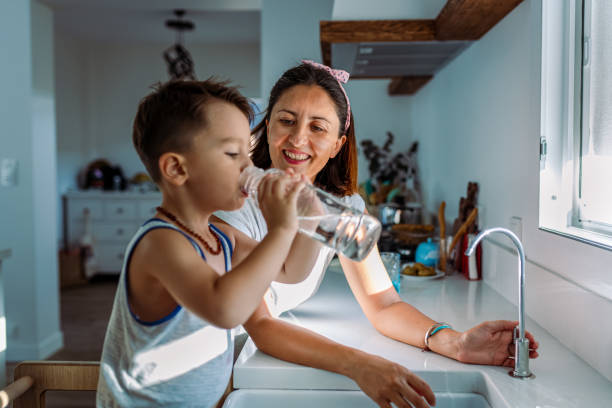
For many health-conscious homeowners, the installation of a high-quality water filter is a milestone of domestic safety. We research the best under-sink reverse osmosis systems for the kitchen, buy the most reputable pitchers for the dining table, and feel a sense of relief knowing that the water we use for drinking and cooking is purified. However, there is a common and dangerous oversight in this strategy: the “secondary” taps. While the kitchen is treated like a laboratory, the bathroom—where we brush our teeth, wash our faces, and bathe our children—is often left entirely unprotected.
The reality is that in most modern homes, filtration is localized rather than holistic. This creates a “safe zone” in the kitchen while leaving the rest of the house vulnerable to the chemical and metallic realities of the building’s plumbing. For families, understanding that “filtered” doesn’t mean “filtered everywhere” is a critical part of public education. The water coming out of your bathroom vanity could have a fundamentally different chemical profile than the water in your kitchen, even if they originate from the same municipal main.
The “Premise Plumbing” Variable
The primary reason bathroom water is often less safe than kitchen water involves the complexity of internal plumbing. Once water passes your home’s meter, it branches off into various “runs.” The run to your kitchen might be relatively new, or it might be frequently flushed due to high usage. The run to a guest bathroom or a master suite, however, may consist of older pipes or fixtures that haven’t been updated in decades.
In many older homes, the bathroom was the first place to receive indoor plumbing, meaning the pipes behind those tiled walls are often the oldest in the house. These pipes may be made of galvanized steel or copper joined with lead-based solder. Because these pipes are hidden, homeowners assume they are as safe as the modern kitchen fixtures they can see. This interaction between the city’s water and your private infrastructure is a core focus of our blog, as it highlights the “last mile” risks that a kitchen filter simply cannot reach.
The Stagnation Trap in Secondary Taps
Usage patterns play a massive role in water safety. In the kitchen, we are constantly drawing water for coffee, tea, pasta, and drinking. This keeps the water moving, which prevents it from sitting in contact with the pipes for too long. In the bathroom, however, water usage is often intermittent. We use a few ounces to brush our teeth in the morning and evening, but for the other 23 hours of the day, the water sits stagnant.
When water sits motionless, it enters a state of high “contact time.” This is when leaching occurs. If there is lead or copper in your bathroom plumbing, the stagnant water will slowly absorb those metals. If you brush your teeth with the “first draw” of water in the morning, you are potentially ingesting a concentrated dose of whatever has leached overnight. This is why we emphasize in our faq that “point-of-use” filters are only effective for the specific tap they are attached to.
Bathroom Fixtures: The Hidden Source of Lead
Even in relatively modern homes, the bathroom faucet itself can be a source of contamination. Until the 2014 updates to the “lead-free” standards, brass plumbing fixtures could contain up to 8% lead by weight and still be legally sold. Many stylish, high-end bathroom faucets installed just a decade ago fall into this category.
Furthermore, many bathroom faucets utilize decorative finishes and internal components that are less regulated than those meant for the kitchen. Because the industry assumes you won’t be “consuming” water from a bathroom sink, the standards are historically less rigorous. However, for a toddler who drinks from the tap during bath time or a parent who fills a nighttime water glass from the vanity, these fixtures pose significant health risks. Lead is a neurotoxin with no safe level of exposure, and its effects on a child’s developing brain are permanent.
The Dangers of Aerosolization: Chlorine and Biofilms
Most homeowners focus on ingestion, but the bathroom presents a unique risk: inhalation. When you take a hot shower or run a high-pressure faucet, the water is aerosolized into a fine mist. If your water is heavily chlorinated—a common practice in local municipal treatment to prevent bacterial growth—you are breathing in those disinfectant byproducts.
Furthermore, the showerhead and the bathroom faucet aerator are prime environments for the growth of “biofilms”—slimy colonies of bacteria like Legionella or Mycobacterium. These bacteria thrive in the warm, moist environment of a bathroom and can be inhaled through the steam. A kitchen filter does nothing to protect your lungs from the microbial and chemical load present in your shower.
The False Security of “City Water” Policy
Many residents skip testing their bathroom taps because they believe the city’s annual report covers the entire home. It is important to remember that municipal policy is designed to ensure the safety of the water at the street level. The city is not responsible for the lead solder behind your bathroom vanity or the bacterial colony inside your showerhead.
Relying on a “passing” city report is like relying on a weather report for the city to decide if there is a leak in your specific roof. The data is too broad to be personally actionable. For true safety, the water must be tested at the “point of consumption,” and in a modern home, that means testing every bathroom where a child or adult might inadvertently drink or inhale the water.
Testing: The Only Way to See the Invisible
Because you cannot see lead and you cannot always smell the bacteria in a biofilm, laboratory testing is the only solution. A comprehensive test can compare the water in your kitchen (post-filter) to the water in your master bathroom. In many cases, the results are startlingly different.
Testing the “first draw” from a bathroom tap can reveal lead spikes that are completely absent in the kitchen. This data allows homeowners to make informed decisions. Instead of assuming the whole house is safe because of one kitchen filter, you can identify which bathrooms need their own filtration or which fixtures need to be replaced entirely. If you are unsure how to collect a sample from a shower or a vanity, our contact page can connect you with specialists who can guide you through the process.
Solutions for a Holistic Safety Plan
If you discover that your bathroom water is unsafe, there are several steps you can take to bridge the gap:
Install Shower Filters: While they aren’t always effective against lead, high-quality KDF shower filters can significantly reduce chlorine and some heavy metals, protecting your skin and lungs.
Point-of-Use Filters for Vanities: If your family frequently drinks from the bathroom sink, consider installing a small carbon or lead-rated filter under the vanity.
Fixture Replacement: If a specific faucet is the source of the lead, replacing it with a modern, stainless steel “zero-lead” fixture is a permanent fix.
Flushing Habits: Make it a habit to run the bathroom tap for at least 30 seconds before using it to brush your teeth, especially in the morning.
Whole-House Filtration: For those with the budget, a whole-house system treats the water as it enters the home, providing a baseline of protection for every tap, though it still won’t fix leaching that occurs after the filter in older internal pipes.
Conclusion: Closing the Safety Loop
Domestic water safety is not a “one and done” task. It is an ongoing commitment to understanding how your home’s infrastructure interacts with the water you use. A kitchen filter is a great first step, but it is not a complete solution. By acknowledging the filtration gap and investigating the water quality in your bathrooms, you can ensure that your home is truly a sanctuary from top to bottom.
Your health doesn’t stop at the kitchen door. Ensure that every drop of water in your home—whether it’s for a morning coffee or a midnight tooth-brushing—meets the same high standard of purity.