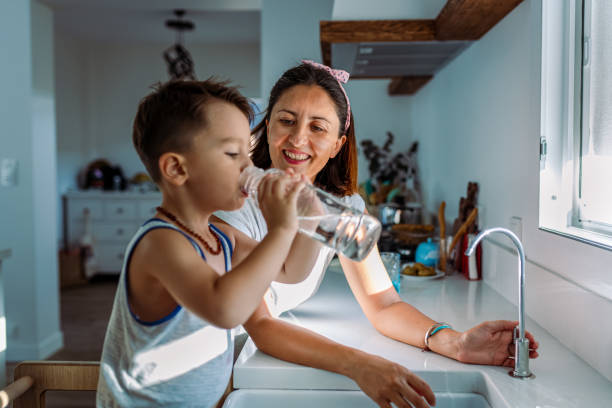
It is a common evening occurrence in households across the country: a parent turns on the kitchen faucet to fill a pot for pasta or a glass for a child, and for a split second, the kitchen smells like a public swimming pool. This sharp, bleach-like aroma is unmistakable. For most families, the immediate reaction is one of mild annoyance followed by a shrug of “well, at least I know it’s clean.” Because chlorine is synonymous with disinfection, many assume that a strong odor is simply proof that the municipal water utility is doing its job.
However, environmental health experts are noticing a troubling trend. While more families are verbally reporting these “chlorine spikes,” fewer are following up with actual laboratory testing. This gap between sensory perception and scientific verification is a significant concern. A chlorine odor is not just a sign of disinfection; it is a chemical signal that the water’s balance has shifted. By skipping the test, families may be missing the secondary effects that high chlorine levels have on their home’s internal plumbing.
The Chemistry of the “Pool Smell”
To understand why an odor warrants a test, one must understand what that smell actually represents. Municipalities use chlorine to kill pathogens. When the water leaves the treatment plant, it contains “free chlorine.” Under ideal conditions, this has very little scent. The strong “pool smell” usually occurs when that chlorine reacts with organic matter—such as biofilm, pipe scale, or sediment—inside the distribution system or your home’s pipes.
These reaction products are called chloramines or disinfection byproducts (DBPs). If you smell a strong odor, it often means the chlorine is actively working to neutralize something within your “premise plumbing.” While the water may be bacterially safe, the high concentration of these chemicals can lead to other health risks over long periods of exposure. Relying on your nose to tell you the water is “safe” is like relying on a car’s engine noise to tell you the oil is clean; it’s an indicator that the system is running, but it tells you nothing about the underlying quality.
Chlorine as a Catalyst for Corrosion
The most significant danger of ignoring a chlorine odor is the impact the chemical has on metal pipes. Chlorine is a powerful oxidant. When levels are high, or when the water chemistry fluctuates, the water becomes more “aggressive.” This aggressive water can scour the protective mineral coating on the inside of older pipes, leading to the leaching of lead and copper.
In many older urban areas, the local infrastructure is a patchwork of materials. A home might be served by a modern main in the street but still have lead-soldered copper pipes or galvanized iron risers behind the drywall. If a family notices a chlorine smell but skips testing, they might be unaware that the very chemical meant to protect them is actually dissolving their plumbing and introducing heavy metals into their morning coffee. This “invisible” side effect of disinfection is a primary focus of our public education initiatives.
The “False Security” of Municipal Compliance
Families often skip testing because they trust the annual water quality report sent by their city. It is important to remember that these reports reflect the water quality at the treatment plant or at specific sampling stations throughout the city. They do not—and cannot—account for the changes that happen once the water enters your specific property.
If a water main break occurs a few blocks away, or if the city increases the chlorine dose to account for seasonal runoff, your home might receive a “pulse” of high-chlorine water. This pulse can stay trapped in your home’s pipes or water heater for days. A city-wide policy on disinfection ensures the water is safe for the masses, but it doesn’t guarantee the chemical stability of your individual tap. Only a home-specific test can provide that data.
Disinfection Byproducts: The Long-Term Concern
When chlorine reacts with organic material, it creates byproducts like Trihalomethanes (THMs). While the EPA regulates these at the municipal level, concentrations can vary wildly depending on “water age”—how long the water has been sitting in the pipes. In homes with low water usage or long service lines, THM levels can rise significantly.
Some studies have linked long-term exposure to high levels of DBPs to an increased risk of certain cancers and reproductive issues. For families with young children or those planning for a pregnancy, the “pool smell” should be treated as a prompt to verify that these byproduct levels are within safe limits. We frequently discuss the nuances of these emerging contaminants on our blog, helping families move beyond the basics of lead and copper.
The Myth of the “Clean” Scent
The psychological association between the smell of chlorine and “cleanliness” is a difficult hurdle to overcome. In our faq section, we often encounter the question: “If I don’t smell chlorine, does that mean my water is dirty?” The answer is no. Ideally, water should be odorless. A lack of smell doesn’t mean a lack of protection; it means the water is chemically balanced.
Conversely, a strong smell is a sign of imbalance. It may mean the water is “over-treated,” or it may mean the water is reacting with a heavy load of biofilm in your pipes. Skipping the test because the water “smells clean” is a fundamental misunderstanding of water chemistry. True safety is tasteless, odorless, and verified by a lab.
Why Testing is the Only Solution
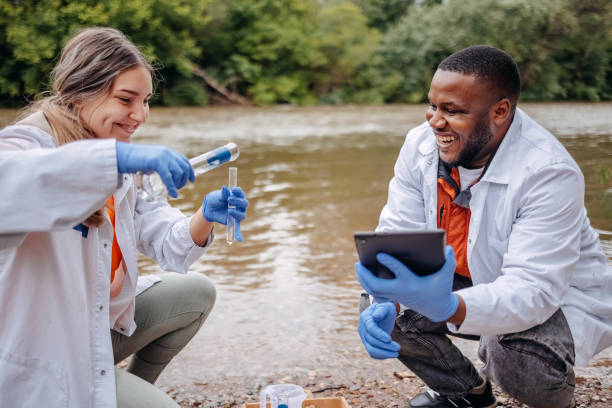
A laboratory test provides a “chemical fingerprint” that your nose simply cannot. It differentiates between free chlorine (the good stuff) and total chlorine (which includes the odorous byproducts). Furthermore, a comprehensive test looks for the “consequences” of high chlorine—checking for elevated lead, copper, and iron levels that may have been triggered by the chemical’s corrosive nature.
Testing also helps families choose the right filtration. If you only have a chlorine taste and odor issue, a simple carbon filter may be sufficient. But if the chlorine has triggered lead leaching, you need a much more sophisticated NSF-certified system. Without a test, you are essentially throwing money at a problem you haven’t fully diagnosed.
Taking the First Step Toward Verification
If your family has noticed a persistent or recurring chlorine odor, it is time to move from observation to action. A “first-draw” sample, taken after the water has sat in the pipes for at least six hours, is the best way to capture how the chlorine is interacting with your home’s plumbing.
Testing is not an admission that something is wrong; it is a proactive step to ensure everything is right. In an era where we have more data than ever about our health—from sleep trackers to heart rate monitors—it is only logical that we have data about the resource we consume more than any other.
Conclusion: Trust Your Senses, But Verify with Science
Your sense of smell is a gift—it is a built-in alarm system for your environment. When you smell chlorine, your body is telling you that the chemistry of your water has changed. Listen to that signal, but don’t stop there. Verification through laboratory testing is the only way to protect your home’s infrastructure and your family’s long-term health.
Safe water is a foundation of a healthy home, and that foundation is built on data, not just “clean” scents. Let the next time you smell chlorine be the prompt that leads to a clear, verified report and total peace of mind.
If you are ready to get a definitive answer about the “pool smell” in your home or need help choosing a testing package that covers disinfection byproducts and heavy metals, we are here to guide you. Please visit our contact page to speak with a specialist. Our goal is to help every family turn a sensory observation into a scientific certainty.