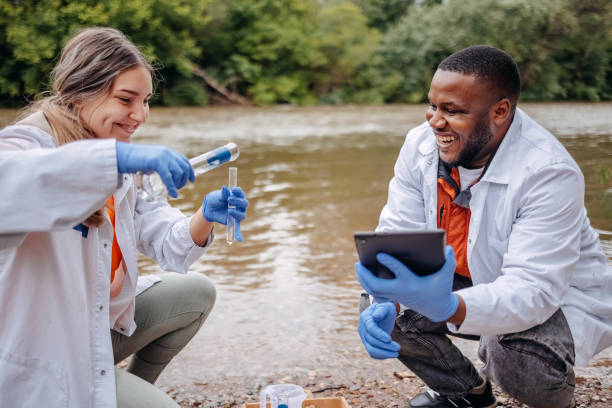
In the heart of Manhattan’s Upper West Side, a premier daycare facility recently took a significant step toward total environmental transparency. While the center has long been celebrated for its low teacher-to-student ratios and advanced early childhood curriculum, a new priority emerged in early 2026: the absolute verification of tap water safety. Following a series of inquiries from a group of proactive parents regarding the aging infrastructure of the historic building the daycare occupies, the administration moved beyond standard compliance and implemented a rigorous, independent water testing protocol.
This shift reflects a broader trend across New York City, where the “champagne of tap water” is being scrutinized not at its source, but at the point of consumption. For parents in high-density urban environments, the concern isn’t the water leaving the reservoirs upstate; it is the “last mile” of lead-soldered pipes and brass fixtures that define Manhattan’s architectural legacy. By introducing regular laboratory audits, this daycare has set a new benchmark for public education and safety in the childcare sector.
The Manhattan Infrastructure Paradox
Manhattan is home to some of the most expensive real estate in the world, yet much of its underlying plumbing infrastructure dates back to the early-to-mid 20th century. For a daycare operating in a pre-war building, the elegance of high ceilings and original masonry often masks a network of galvanized steel risers and copper pipes joined with lead-based solder.
While the city’s Department of Environmental Protection (DEP) works tirelessly to maintain safe water quality at the street level, policy regarding the interior plumbing of private buildings remains the responsibility of the property owner or tenant. This daycare administration realized that simply relying on the city’s general report was insufficient for protecting a population of infants and toddlers whose developing bodies are uniquely sensitive to environmental toxins.
Why Early Childhood Centers are High-Risk Zones
The health risks associated with water contaminants are magnified significantly in a daycare setting. Infants and young children consume more water per pound of body weight than adults. Furthermore, their bodies are still developing the blood-brain barrier, which normally protects the central nervous system from certain toxins.
Lead, even at extremely low levels, is a potent neurotoxin that can cause irreversible damage to a child’s cognitive development, attention span, and behavioral regulation. Because lead is tasteless, odorless, and colorless, it can leach silently from a building’s service line or internal solder without any sensory warning. The parents at the Manhattan daycare weren’t just asking for a “pass/fail” test; they were asking for a deep-dive into the science of their children’s daily environment.
The Disturbance Factor: When Construction Impacts the Tap
One specific concern raised by the parents was the amount of local utility work occurring on their Upper West Side block. In Manhattan, the constant cycle of street repairs and water main modernizations can have an immediate, localized impact on water quality.
When a water main is disturbed or a nearby building undergoes a major renovation, physical vibrations can cause the protective mineral scale inside old lead pipes to flake off. These “lead pulses” can travel into a daycare’s plumbing system, resulting in a sudden spike in lead levels that wouldn’t show up on an annual or bi-annual municipal test. By implementing their own testing schedule, the daycare can now monitor for these fluctuations, ensuring that the water used for mixing infant formula and preparing snacks remains consistently below health-based advisory levels.
Moving Beyond the “Lead-Free” Label
Another revelation for the daycare administration during their initial audit was the reality of modern fixtures. Even “lead-free” faucets installed during recent renovations can contain up to 0.25% lead. While this is a low amount, the faq section of water safety organizations clarifies that new fixtures can undergo a “leaching spike” in their first few months of use.
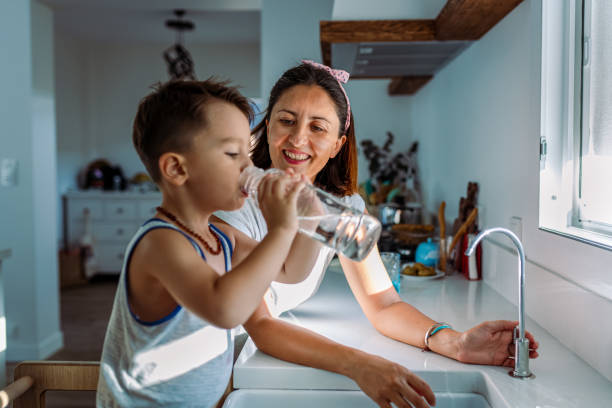
The daycare’s independent lab results identified one specific sink in the toddler room that showed elevated copper and trace lead, despite having a relatively new faucet. This finding allowed the facility to immediately replace the internal components of that fixture and install a high-quality point-of-use filter. Without the data, this localized “hot spot” would have remained a hidden exposure point for every child who used that sink for a quick drink of water after playtime.
The Role of Stagnation in School Environments
Daycares and schools face a unique water quality challenge: stagnation. During weekends, holidays, and summer breaks, water sits motionless in the pipes for days or weeks at a time. This “contact time” is exactly when the most significant leaching of lead and copper occurs.
When the daycare reopens on Monday morning, the “first draw” of water can contain the highest concentration of contaminants. Part of the daycare’s new safety policy includes a rigorous “flushing protocol” every morning, where all taps are run for several minutes to move the stagnant water out of the building. However, they realized that flushing is a behavioral solution that requires constant verification. The addition of regular laboratory testing provides the “receipt” that their flushing protocol is actually working.
Building Trust Through Transparency
The most significant outcome of the daycare’s decision wasn’t just the chemical results; it was the restoration of parent confidence. In our blog, we often discuss how data-driven transparency is the most effective way to manage community anxiety. By sharing the full laboratory reports with every family, the daycare moved from a defensive posture to one of partnership.
Parents were no longer left to wonder about the health risks in the building; they had the facts in their inbox. This transparency has become a major selling point for the daycare, attracting new families who prioritize environmental safety as much as educational excellence. In a city where “luxury” often refers to aesthetics, this Manhattan facility has redefined it as the peace of mind that comes from a certified-clean environment.
Practical Steps for Manhattan Parents and Facilities
The success of this Manhattan daycare provides a roadmap for other facilities across the city. If you are a parent or an administrator concerned about water safety, here are the essential steps:
- Identify the Service Line: Verify whether the building is served by a lead service line. Lead is a dull gray metal that is soft enough to be scratched with a key to reveal a shiny, silver surface.
- Request a “First-Draw” Sample: When testing, ensure the lab captures the very first liter of water out of the tap after at least 6 to 8 hours of stagnation. This represents the “worst-case scenario” for lead leaching.
- Audit All Consumption Points: Don’t just test the kitchen. Test every sink, water fountain, and bottle-filling station that a child might use.
- Implement Certified Filtration: Look for filters specifically certified to NSF/ANSI Standard 53 for lead reduction. Not all pitcher or refrigerator filters are rated to remove heavy metals.
As highlighted in the faq section, these actions are the only way to move beyond the assumptions of municipal reports and ensure the safety of a specific “premise plumbing” system.
Conclusion: A New Standard for Childcare
The decision by this Manhattan daycare to add independent water testing is a powerful reminder that we are all stewards of our children’s environment. While New York City provides an incredible foundation for urban life, the history written into our pipes requires active oversight. We can no longer afford to treat water quality as an invisible variable.
The most effective next step for any Manhattan daycare administrator or concerned parent is to move from curiosity to data. If you have questions about the health risks in your specific neighborhood or want to understand the public education resources available to childcare centers, the best path forward is to contact a specialist today. Let the science of laboratory verification provide the foundation for a healthier, safer future for the youngest New Yorkers.