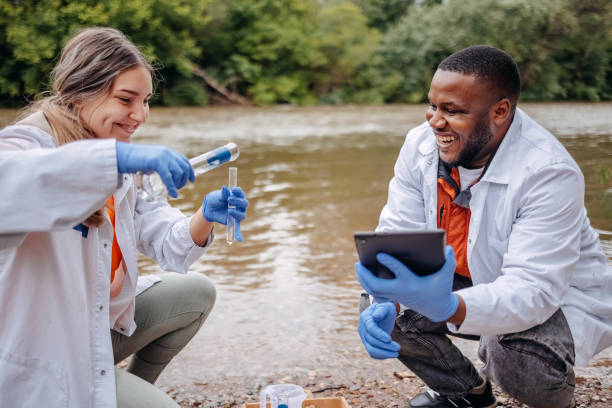
For decades, the standard for water safety in American schools was relatively narrow. Most administrators focused their testing efforts almost exclusively on high-traffic drinking fountains and the central kitchen facilities where school lunches were prepared. The reasoning was simple: these were the primary points of consumption. However, as our understanding of “premise plumbing” and the chemistry of heavy metal leaching has evolved, that narrow focus is being replaced by a much more comprehensive strategy. Today, a growing number of school districts are implementing protocols to test every single faucet—including classroom sinks once reserved only for hand-washing or art projects.
This shift represents a fundamental change in how we view the school environment. We are moving away from the assumption that “non-potable” labels or verbal instructions are enough to protect students. Instead, schools are adopting a “health-at-every-tap” philosophy, recognizing that in the busy, often unpredictable environment of a classroom, any source of water is a potential source of ingestion.
The Reality of Student Behavior
The primary driver behind testing classroom sinks is a practical acknowledgement of student behavior. Despite the presence of dedicated water bottle filling stations in the hallways, students—especially younger children—frequently use classroom sinks to fill water bottles, rinse out snack containers, or even take a quick drink during a lesson. In an elementary school setting, a sink used for “hand-washing only” is often used for much more.
When a child drinks from a classroom sink that hasn’t been tested, they are bypassing the safety net the school has worked so hard to build. By testing these secondary outlets, schools are closing a dangerous loophole in their safety protocols. This proactive approach is a cornerstone of the public education initiatives we support, emphasizing that safety is only as strong as its weakest link.
The Science of “Dead Legs” and Stagnation
Classroom sinks present a unique chemical challenge because they are often the most “stagnant” points in a school’s plumbing system. Unlike the main drinking fountain, which may be used hundreds of times a day, a classroom sink might sit unused for days, weeks, or even an entire summer break.
When water sits motionless in a pipe, it has maximum contact time with the plumbing materials. If those pipes are made of copper with lead-based solder, or if the faucet fixture itself is an older brass model, the water begins to “cook.” The concentration of lead and copper rises the longer the water remains still. When a student eventually turns on that tap to fill a cup, they receive a concentrated “slug” of heavy metals that have leached into the stagnant water. Understanding these health risks is vital, as lead is a potent neurotoxin that can interfere with a child’s ability to learn and focus.
Material Variability Within the Building
Another reason for comprehensive testing is the sheer variability of materials found in school buildings. Many schools have undergone multiple renovations over several decades. A wing built in the 1950s might have galvanized steel pipes, while a 1990s addition might have copper with “lead-free” solder that still contains trace amounts of the metal.
Because of this patchwork of infrastructure, the results from a hallway fountain cannot be used to predict the safety of a sink in a nearby classroom. They may be on different branch lines with entirely different “plumbing DNAs.” Schools are learning that water quality is a local issue that exists tap-by-tap. Testing every outlet is the only way to identify the specific “hot spots” where legacy materials are still hiding.
Copper: The Overlooked Contaminant
While lead usually dominates the headlines, copper is becoming a major focus of school testing programs. High levels of copper in drinking water can cause immediate gastrointestinal distress, including nausea, vomiting, and stomach cramps. In the long term, chronic exposure can lead to more serious liver and kidney issues.
Copper leaching is often a sign of aggressive water chemistry—water that is slightly acidic or has low mineral content. In schools with large, complex plumbing loops, the water chemistry can shift as it travels through the building. A classroom at the end of a long plumbing run might have significantly higher copper levels than a classroom located near the water main. By including copper in their classroom sink panels, schools are protecting students from both acute and chronic illness.
The Evolution of State and Federal Policy
Governmental policy is increasingly mandating this granular level of testing. Many states have recently passed legislation requiring schools to test all outlets used for “drinking or cooking,” and the definition of those terms is expanding to include any sink that a student could reasonably access for consumption.
The EPA’s 3Ts (Training, Testing, and Taking Action) toolkit has also been updated to encourage more comprehensive sampling. These policy shifts are designed to move schools away from “representative sampling”—where only a few taps are tested—toward a model of total transparency. Schools that fail to test classroom sinks may find themselves out of compliance with emerging standards and vulnerable to liability if a student is found to have elevated blood lead levels.
Maintaining the Safety Net: Filters and Aerators
When a classroom sink fails a test, it doesn’t always mean the entire building needs a re-pipe. Often, the problem is localized to the fixture itself. Schools are increasingly using point-of-use (POU) filters on classroom sinks to provide an immediate layer of protection. However, as we discuss in our faq, these filters must be strictly maintained. A clogged or expired filter can actually become a breeding ground for bacteria or a source of re-contamination.
Another common culprit in classroom sink failures is the aerator—the small screen at the end of the faucet. Over time, tiny flakes of lead or copper can become trapped in the screen. Every time the water is turned on, it passes over these trapped particles, spiking the concentration of metals. Part of the new testing trend includes a “cleaning and maintenance” protocol for aerators in every classroom, a simple step that can dramatically improve water quality.
Transparency and Community Trust
In the age of instant information, parents and teachers are more aware of environmental risks than ever before. When a school district proactively tests every tap and shares those results openly, it builds immense trust within the community. Conversely, when testing is limited or results are obscured, it can lead to anxiety and conflict.
Many districts are now using digital “water maps” to show the status of every faucet in every building. If a classroom sink is found to have elevated levels, it is clearly marked as “out of service” or “hand-wash only” until remediation is complete. This level of transparency is a frequent topic on our blog, where we highlight best practices for school communications.
Closing the “Art Room” Gap
Specialty classrooms, such as art rooms or science labs, are of particular concern. These sinks are often used for cleaning brushes or equipment, and students may inadvertently ingest water while working on projects. Furthermore, these sinks often have specialized faucets that may contain higher lead content than standard models.
By extending testing to these specialty areas, schools are ensuring that “hands-on learning” doesn’t come with unintended health consequences. It is about creating a “culture of safety” where every drop of water in the building is held to the same high standard as the water in the nurse’s office.
Taking the Next Step for Your School
If you are a parent, teacher, or school administrator, the push for comprehensive testing is an opportunity to improve the health and well-being of your entire community. It starts with a simple audit: Does your school’s current plan include every classroom sink? If not, it may be time to update your protocol.
The transition to all-tap testing requires resources and expertise. If your district needs guidance on how to implement a granular sampling plan or how to interpret complex lab results, we are here to help. Our contact page connects you with specialists who understand the unique infrastructure challenges of educational facilities.
Conclusion: Ensuring Every Drop is Safe
The movement to test classroom sinks for lead and copper is a sign of a maturing safety culture in our schools. We are no longer content with “good enough” when it comes to the water our children interact with for six to seven hours a day. By identifying and fixing the localized issues that hide in classroom plumbing, we are providing students with an environment that truly supports their growth and potential.
Ensuring every drop is safe is an investment in our children’s future. It is a commitment to the idea that a school should be the safest place in a child’s world—from the playground to the classroom sink.